

Tensei Pro White 1K Golf Shaft Review

Mitsubishi Tensei Pro White 1K Driver Shaft Review

By Russ Ryden, Fit2Score, A Dallas Fort Worth Club Fitter & Club Maker
The Highlands Performance Golf Center, Carrollton Texas 
Golf Digest Certified America’s 100 Best Club Fitter

The woven Kevlar® material use by Mitsubishi Tensei Pro driver shafts have been available since 2016. They feature a Carbon Fiber/DuPont™ Kevlar® (CK) weave in the butt-section of the shaft. I have seen many shafts over the years with a woven material placed in the butt of shafts. This is as an indication that shaft manufactures recognize the thin walls near the but of the shaft deform and oval under load. The ovaling of the shaft in this area can contribute to shot dispersion. The woven Kevlar® material use by Mitsubishi is the only material I have measured to date where I can see a measurable effect. Hoop deformation significantly dips in this section of the shaft. Reduced hoop deformation in the 1K weave is the same as the CK weave. Mitsubishi tells us the 1K material transmits more feel.
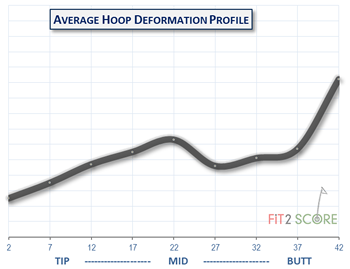
Hoop deformation has a significant effect on the EI profile of the golf shaft.  Hoop deformation is manifested in the thin wall, butt section of the shaft. Mitsubishi engineering integrated the woven material hoop rigidity into the Tensei Pro designs, preserving the archetypical White, Blue and Red Board profiles of the Diamana family. 

To continue reading this section of the review, you must be registered at a higher level membership.
Russ


Fujikura Speeder Pro Driver Shaft Review

Fujikura Speeder Pro Driver Shaft

Russ Ryden, Golf Digest America’s 100 Best Clubfitter
Fit2Score, Dallas Fort Worth, Texas

SpeederProDriverRollingImageFujikura adds a Diver model to the Pro lineup, the Speeder Pro in 2015. I like the graphics on the Fujikura Pro Golf Shafts. The roll over from positive to negative on opposite sides of the shaft is great shaft art. The Pro line is available only through Fujikura charter dealers. This line of shafts is unique, within the line are 4 different profiles, each tuned to a particular swing type. That is an important aspect to understanding this shaft model.  Overlaying all the profiles is a confusing matrix. Sorting them as shown in the graphic below into their weigh groupings reveals the product strategy.

The technical discussion and measurements are available only to registered readers

The Speeder Pro uses high density material in the butt section to raise the balance of the shaft. That is seen in the positive numbers in the chart above. Balance numbers shown here are relative to the center of the shaft. A positive number is a balance toward the butt, a negative number toward the tip. These points are about as high I we see in current production. And as seen in the graphics and explained in the discussion with Alex, this was done without excessively stiffening the butt section of the tip. This was further aided by using high modulus material in the tip of the shaft. This created adequate tip stiffness without adding wall thickness and weight. All this speaks to the technology now being used in golf shafts.

Lets here what Alex Dee, from Fujikura has to say about these shafts. This is a segment of a 30 minute conversation about club fitting in general and about the 2015 Fujikura Shaft Models.

To see the entire discussion with Alex, click here.  Not shown in the numbers presented here. The Speeder Pro has a slightly larger butt than we typically see. These will make the grips a little larger. Something I find enhances the consistency of most golfers. Larger grips make it easier to hold on to the shaft.

If you are interested in this shaft, find a Fujikura charter dealer near you.


Nippon N.S.Pro Super Peening

Nippon N.S.Pro Super Peening

By Russ Ryden, A Golf Digest America’s 100 Best Clubfitter
Fit2Score, Dallas Fort Worth, Texas

NPProSuperPeening

I am in the process of rebuilding the Fit2Score shaft knowledge base with 3 iron and wedge profiles. Nippon sent a box full of review samples including the N.S.Pro Super Peening Orange and Blue. I had briefly looked at the Super Peening Blue wedge shafts in the past. They had been suggested as a wedge addition to my fitting system. Readers have asked several times about these shaft so I was interested in getting a full set of measurements of these samples.

The N.S.Pro Super Peening shafts are no longer shown the the Nippon brochures. I had to find a 2008 catalog to see how Nippon presented the shafts. The descriptions there were brief, and the terms used to describe the shafts Orange = Mid Kick Point and Blue = Butt Kick Point brought me back to a time when I was taught to think about shafts with those terms. We were taught back then that the higher the kick point the lower the shaft would launch. My exploration of EI profiles vastly expanded my understanding of a golf shaft beyond things like kick point and frequency matching. As I looked at the measurement of these two shafts I realized they are good examples to discuss the nature of 3 point EI profiles.

The technical discussion, measurements and testing results are available only to registered readers

Mitsubishi Diamana Thump Fairway Review

Mitsubishi Diamana Thump Fairway

By Russ Ryden, A Golf Digest America’s 100 Best Clubfitter
Fit2Score, Dallas Fort Worth, Texas


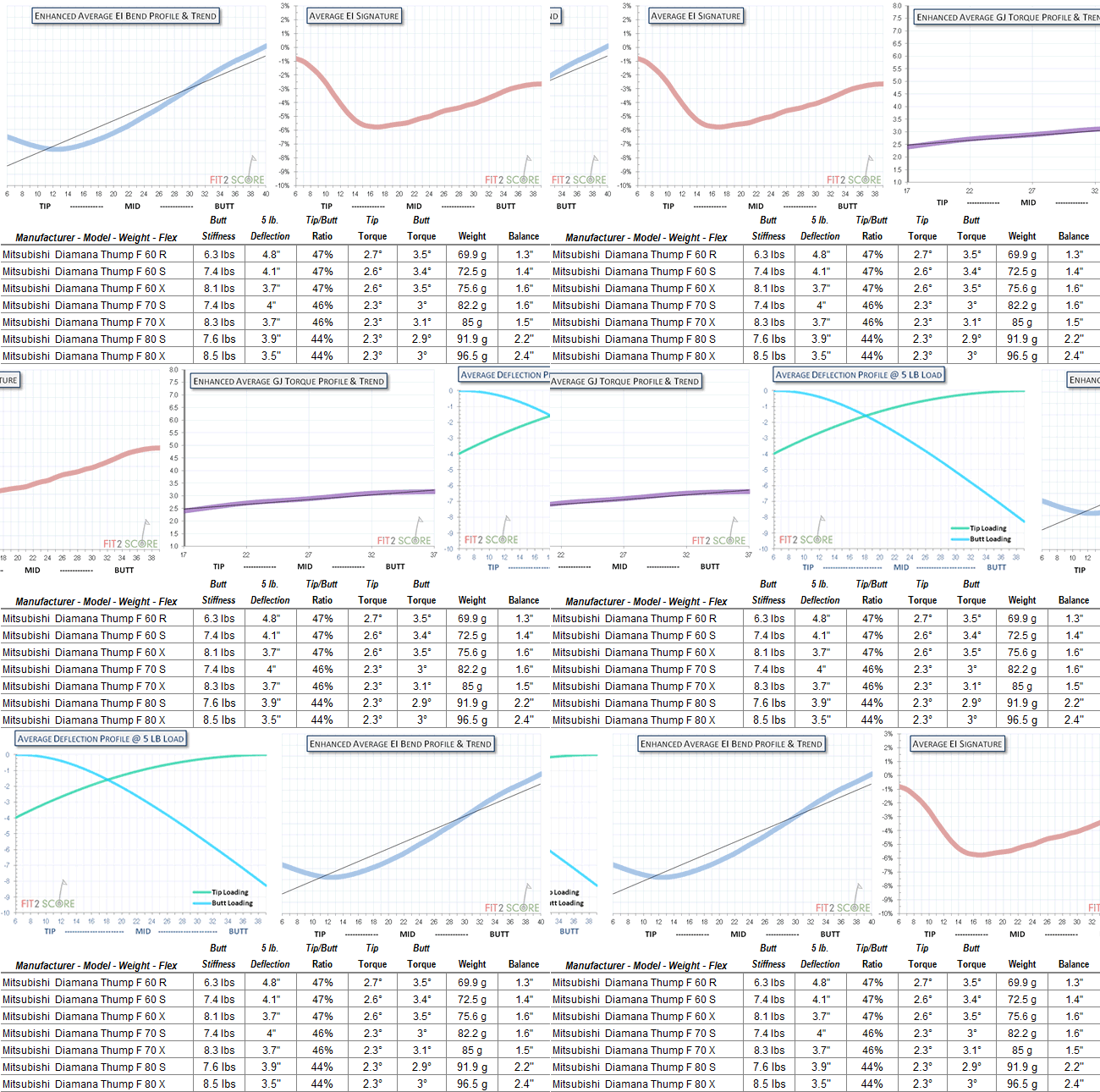
The Diamana Thump name has been used before in a line of iron shafts and in a hybrid shaft. The irons have been discontinued. The Diamana Thump Hybrid is still available, now a special order item. It is my all time favorite Hybrid shaft and has been in my bag for a very, very long time. When I saw the name thump applied to a fairway shaft I had high expectations, and the measurements of this shaft met them. Mitsubishi discontinued the Fubuki AX Fairway shaft in 2014. It occupied a unique niche, a fairway only shaft, 43″ long uncut, at $250 MSRP, with all the unique qualities of the premium Mitsubishi $400 driver shafts. The Diamana Thump Fairway once again fills this niche. At $250 it puts delivers premium quality at a more approachable price point.

As I worked my way through the measurement of this shaft I left torque for last. Everything looked very good, would the torque be low enough to compete with the premium Diamana’s I have been using in custom fitted fairways. The answer, yes. Tip zone torques of 2.3 in the 70 and 80 gram versions put it into that special class of shafts that can comfortably control the extra weight of a fairway and maintain club head alignment during a preimpact brush with the turf.

Fairway_Diamana_Thump_EiTb
Radial quality of the review samples was 99.6% with a 0.4% standard deviation. Translation: shafts don’t get any rounder, don’t bother with alignment and use this shaft without reservation in a rotating hosel fairway head. Look again at those torque numbers. This is a high launch design, something most of us want in our fairways. The typical shaft that delivers high launch is also high torque. If the stock shaft in your fairway has a tendency to create hooks when you lean on it, you should consider replacing it with the Diamana Thump Fairway. Replacing your stock fairway shaft with the Diamana Thump will create a club you can trust.Fairway_Diamana_MyFavorites

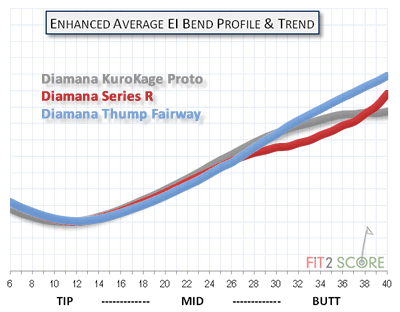
I have built countless numbers of custom fit fairway metals with the Diamama Red and the KuroKage Proto TiNi driver shafts. They launch high, with adequate spin to deliver drop and stop shots. The Diamama Thump Fairway, at about 60% of the price, has a very similar design. It is a bit stiffer in the butt section which for those with an abrupt transition is a good thing. The profile of these shaft from high mid to tip is hard to tell apart. And they all sit in the same torque range. The Thump Fairway and the KuroKage Tour Proto TiNi have much the same hoop strength.

Here is feedback from my first sale, “Went away to Atlanta for a golf weekend with the new Thump shaft in my 3 wood. I was embarrassed hitting it consistently 250 yards in the fairway and 10 yards past my partners’ driver tee shots. Didn’t bother pulling out my driver the last 36 holes. Too bad it can’t help my putting!”  Robert V.

Oban ISAWA Golf Shaft Review

By Russ Ryden, A Golf Digest America’s 100 Best Clubfitter
Fit2Score, Dallas Fort Worth, Texas

ObanISAWAImage

Oban ISAWA RED Driver Shaft

A box of the new Oban ISAWA shafts arrived and as I was preparing them for measurement I was wondering just where Oban would go with a new design. They already have 5 shafts in the premium Kiyoshi family covering a wide range of profiles . They have the the Devotion in the in the high mid price range and the Revenge in the lower mid price range. Just what was the ISAWA going to bring to the party. The first thing I noticed was the MSRP, $199. Putting it in the same price range as the Devotion and the Revenge. It is a different profile from all the other Oban shafts.

The technical discussion and measurements are available only to registered readers

This profile is a classic low launch design. I do not do comparisons between brands here. But, I know this profile. It is new for Oban, but it is not new in the business. This is a great addition to the design matrix offered by Oban fitters.

Aldila Rogue Golf Shaft Review – Driver

Aldila Rogue Driver Shafts

By Russ Ryden, A Golf Digest America’s 100 Best Clubfitter
Fit2Score, Dallas Fort Worth, Texas

I first heard about the Rogue at the PGA Merchandise show in 2014. At that time is was a tour only shaft, made exclusively at Aldila’s California facility. Aldila has always had a huge presence on the PGA Tour. That presence became more visible when Jordan Spieth won the 2015 Masters with the Aldila Rogue in his bag. Lets start with a look at the numbers:

The technical discussion and measurements are available only to registered readers

- - -