KBS TD Driver Golf Shaft Review

KBS TD Driver Shaft Review

By Russ Ryden, Fit2Score, A Dallas Fort Worth Club Fitter & Club Maker
The Highlands Performance Golf Center, Carrollton Texas 
Golf Digest Certified America’s 100 Best Club Fitter

KBS has completed their matrix of carbon fiber shafts with a driver shaft. There are 15 models from 40 grams to 80 grams. The shafts are labeled with a weigh and a category. The category is stiffness. KBS has done a very good job of maintaining this stiffness rating across weights.

To continue reading this section of the review, you must be registered at a higher level membership.
Russ

Golf Shaft Bend Profile Signature

EI BEND PROFILE SIGNATURE

By Russ Ryden, A Golf Digest America’s 100 Best Clubfitter
Fit2Score, Dallas Fort Worth, Texas

This term is the best I could come up with for a way to look at shafts that Kim Braly taught me several years ago.  You will often see him making presentations about the change of stiffness from point to point on the KBS steel iron shafts.  Kim describes his shaft designs as a perfect whip, uniformly loosing stiffness from point to point, butt to tip.

FlexuralSignature

In this illustration of the KBS C Tour shaft the EI profile is shown next to the Bend Profile Signature of the shafts.  You can see how the bend profile signature graphic magnifies the bend profile of the shaft. My math savvy friends looked at this and said, oh, you plotted the first derivative, the change in Y with respect to X, or in this case, how much stiffness changes inch by inch, down the shaft.

Don’t assume I understood the math when I created this chart, the idea for this came to me from Kim Braly. He told me in our first meeting, EI is not new, it has been around since the 30’s. He built his first EI instrument by cutting a hole in a desk. Ok, I can see where that would work. He said what you need to focus on is change of stiffness down the shaft.

My signature chart, the first derivative, is just that, how much does the shaft stiffness change from point to point down the shaft. It is actually the inch by inch slope down the shaft. Stiffness is removed, only the change of stiffness is shown. This is, perhaps, the most important metric for shaft fitting. However, I have never seen it outside of my software. But when you look at charts like the one below, you know some shaft designers are looking at it.

The graph on the left shows the EI profiles of the 2013 Mitusbishi Diamana B, the third generation of the Blue Board design.  Each shaft has a different stiffness.  The illustration on the right charts each of these shafts by showing change of stiffness from point to point.  The absolute stiffness is removed and what is left is an understanding of how the model bends.  Each of the shafts has essentially the same bend profile despite the fact that they are different weights and flexes.

FlexuralSignature2

By comparing shafts with this graphic a club fitter can easily understand the differences between shafts that would otherwise be clouded by weight and flex differences.  And by looking at the uniformity of all of the weights and flexes of a model, can quickly see if and when the designer changed the bend profile.  This often happens with different weights of a model.

Throughout this site you will see EI bend profile signatures used to highlight and explain differences in designs.  Having spent years looking at shafts from this perspective terms like kick point or bend point have come to have little meaning. In fact while doing research for a question I was asked, I found this quote in Total Clubfitting in the 21st Century. My copy was published by Dynacraft in 2007. “Additionally, the effect of bend point and kick point on ball flight now is considered marginal.”  Chapter 7, page 92.

We often see shafts with multiple hinges or knees for want of a better word.  By knowing the bemd signature of a shaft and getting feedback about feel from the golfer, a good fitter understands how a shaft will feel as well as how it will shape ball flight.


Graphite Design Series G Golf Shaft Review

GRAPHITE DESIGN SERIES G

By Russ Ryden, A Golf Digest America’s 100 Best Clubfitter
Fit2Score, Dallas Fort Worth, Texas

GraphiteDesign_2013_G_Image

The Graphite Design G Series of shafts was introduced in 2011. A large bundle of them arrived recently for review.  The measurements got my attention.  I would put this shaft into the same design group that I see with the Mitsubishi Diamana Blue, the Miyazaki JDL and the Matrix Ozik Xcon.  A soft mid in relation to the tip and butt.  This fit is generally suitable for the golfer with a quick, aggressive transition.  We can see this by looking at the average EI and GJ profiles of the Graphite Design G Series.

The technical discussion and measurements are available only to registered readers

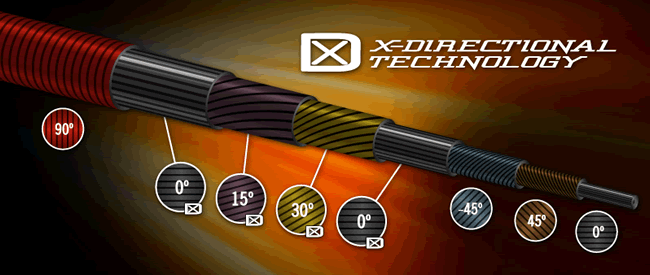
The key to the radial quality and respectable torque numbers of this shaft may be due to the attention paid to fiber orientation in this shaft.  I lifted this illustration from the Graphite Design website.

GraphiteDesign_2013_G_XDirectional

There are 6 different fiber orientations used in this shaft.  The bias plies are at different angles and sandwiched in between the tip to butt, linear fiber plies.  Not all plies extend the full length of the shaft, But from a measurement perspective, the layup works.  With radial quality numbers like these, this shaft, even in the light weight models, is suitable for the rotating hosels in todays current generation of driver and fairway designs.  Looks like were are going to have to take some of these to the range and see what they feel like, stay tuned.


When I entered the golf club fitting business about 15 years ago, there was no standard rating system for golf shaft stiffness. Nor was there a consistent, objective way to compare different models.

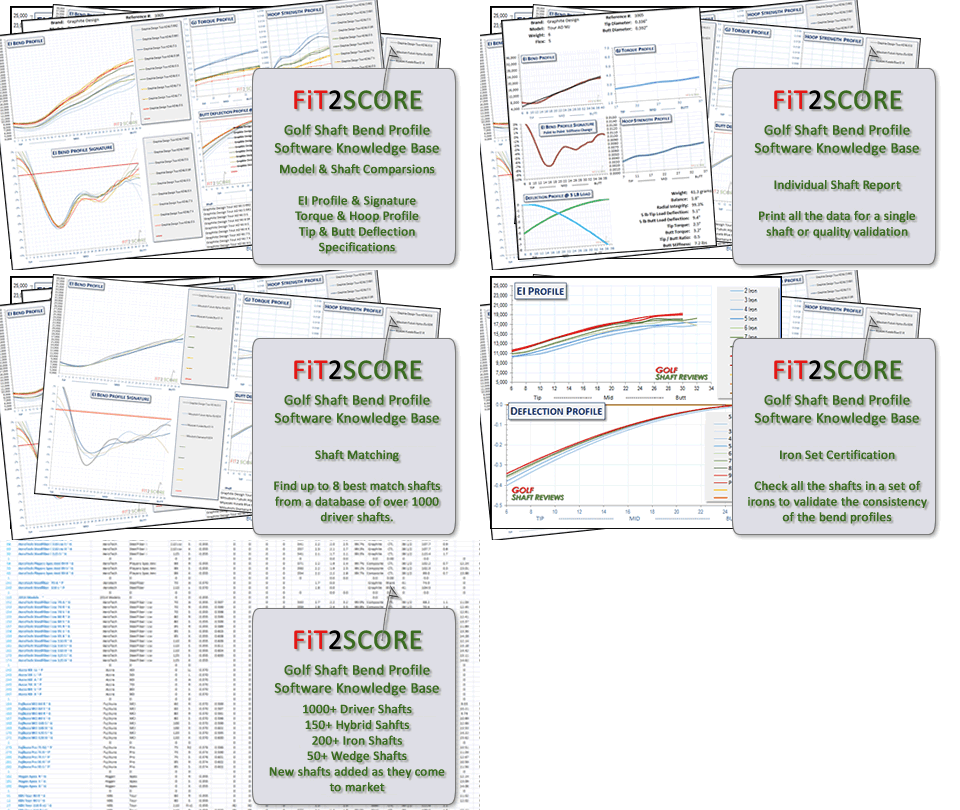
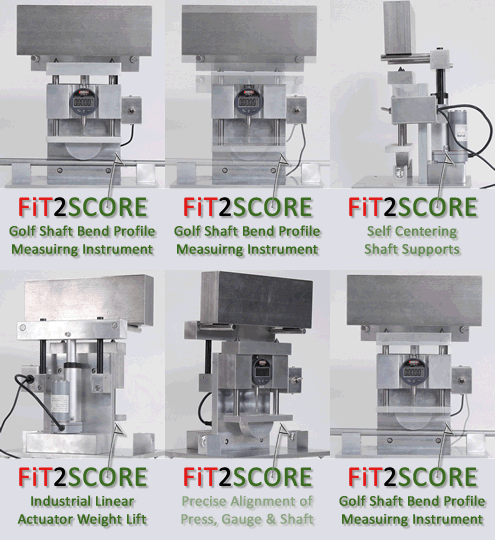
Shaft engineers define stiffness through an incremental flex profile down the length of the shaft. This proprietary detail is rarely shared publicly. To bridge this gap, I developed an accurate 3-point EI bend profile measuring instrument. It is now utilized for shaft design and quality control by several major shaft companies. Marketing discussions of golf shaft properties now shows EI profiles to golfers. We offer a demythologizing approach to understanding golf shafts with clearer more precise language of golf shaft technology. The data we provide is uniform across brands. All measurements are taken on the same instruments with the same processes.

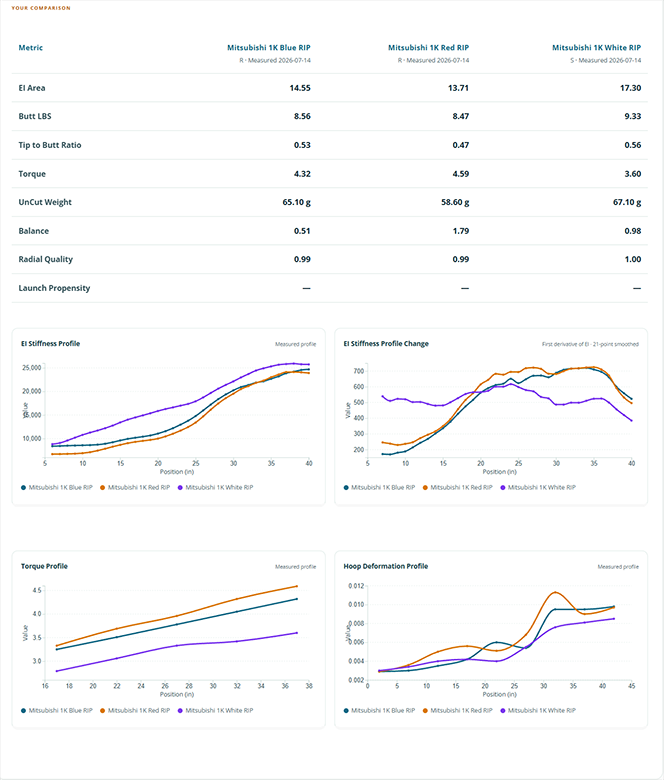
AI has opened a new era in what we can present. Our first step is giving our subscribers a page where you can compare three shafts in the database to each other. The ability to compare shafts has been requested often and we now make it available. This page will develop over the next few months. We welcome your comments and feedback to guide this process.

The Golfer+ subscripton grants access to this page. It is in development and currently is limited to driver shafts. Golfer subscribers can upgrade, advanced subscribers have this page included in their subscriptions.

Detailed documentation, data visualizations, and full background information can be found in the referenced source documents. Today, Golf Shaft Reviews provides thousands of uniform, unbiased measurements to help golfers and fitters see past marketing jargon and optimize equipment choices.

Supported entirely by subscriptions with zero advertisements to maintain our integrity. This site relies on reader support to fund ongoing testing and database expansion. Explore, the TECHNOLOGY MENU  to begin mastering modern shaft design.

Follow DevotedGolfer on Facebook to be advised of new posts. We do not sell your access information or burden our subscribers with emails.