

Fujikura Pro Iron Shaft
By Russ Ryden, A Golf Digest America’s 100 Best Clubfitter
Fit2Score, Dallas Fort Worth, Texas
 The 2014 Fujikura Pro iron shaft is a unique design. I like the graphics, the logo is filled with the darker tone of the top of the shaft on one side and the lighter tone of the bottom of the shaft on the other side. The uniqueness does not stop there.
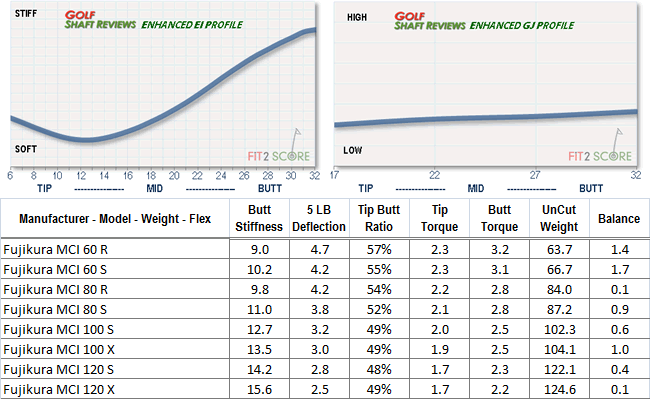
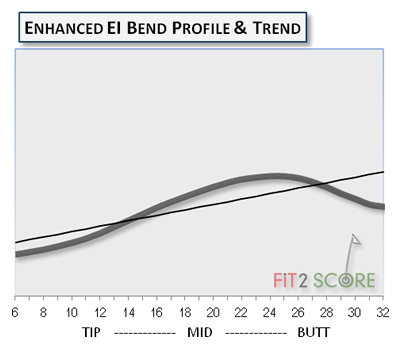 I recently wrote an article about the profile of typical parallel shaft design and how it develops into set profiles with collapsed tip strength differences. While I was writing that article I began measuring the Fujikura Pro shafts and recognized the uniqueness of this design. As you can see in this illustration, it is atypical for parallel shafts. The tip section does not flatten. Instead it continues to lose stiffness toward the tip. Because we measure the stiffness of the shaft in 10″ zones, these subtitles of design are apparent. When we compile the measurements of these zones into a composite image we see the shaft from a different perspective than systems that measure either the entire shaft or additive images of zones of increasing length from the tip toward the butt. While a fitter can work with either image, those that have access to this system have an insight blurred in additive zone systems. We will post a technical article shortly about this issue, so lets return to the Fujikura Pro Iron Shaft.
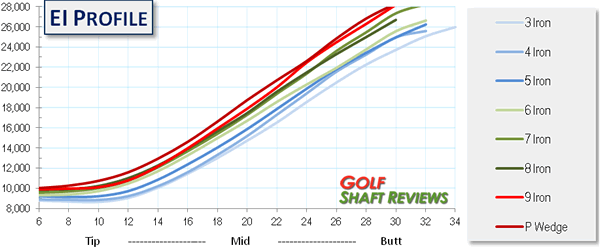
 Average radial quality of the shaft was 99.1% with a 0.8% standard deviation. Don’t worry about aligning these shaft, they are about as close to round as shafts get. As we move forward with iron shaft reviews we will start showing the profile of the 3i, the 6i and the wedge shafts from a set. On some sets the profiles change through out the set. It is important when looking for the set that works best for you that these difference be understood. And it is here that the Fujikura Pro is unique among parallel tip iron shafts. The design profile results in sets that have consistent tip stiffness progressions. There is a video discussion of this in an earlier review.
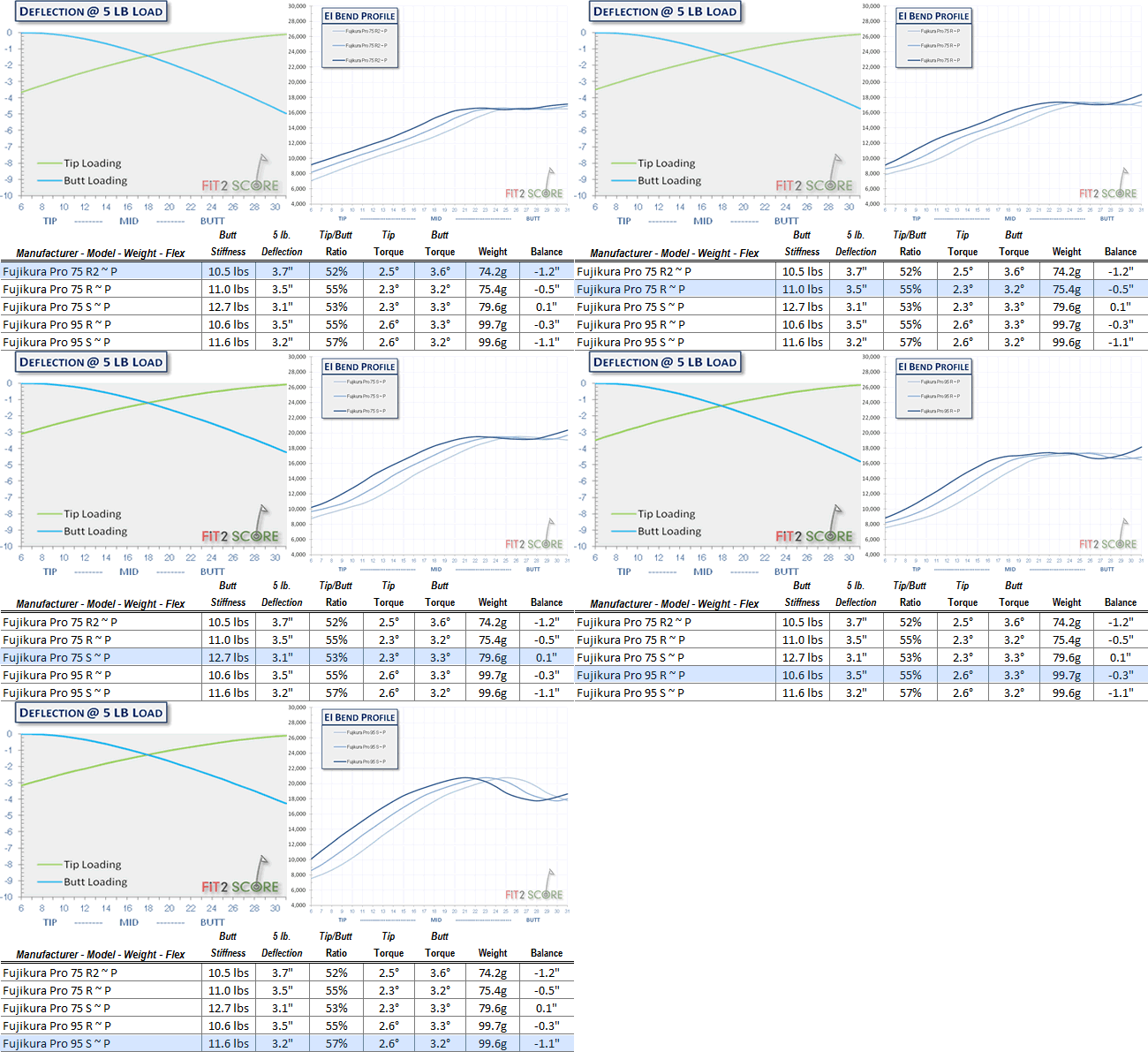
I am still working on the software to show iron set images. We can virtually trim zone profiled parallel iron shafts. The images at the right show the virtually trimmed shaft as a 0″ tip trim, a 2″ tip trim and a 4″ tip trim. Much like a set of constant weight taper shafts, the tip stiffness of the Fuikura Pro increases uniformly through the set. That is unique!
The images on the left show what you would see if you were to put these shafts on a deflection board. Notice how the subtlety of the zone measurements disappears in the overall bend of the loaded shaft. One of my fitting associates described it as being color blind. How does one explain the difference between red and blue to someone that is color blind.
The overall stiffness of the shafts is typical for this weight range of iron shafts. Looking at this profile I see a shaft that is butt soft in relation to the mid section. This is for a player with a smooth transition and a good loading pattern at the top of the downswing. That is discussed in this video.